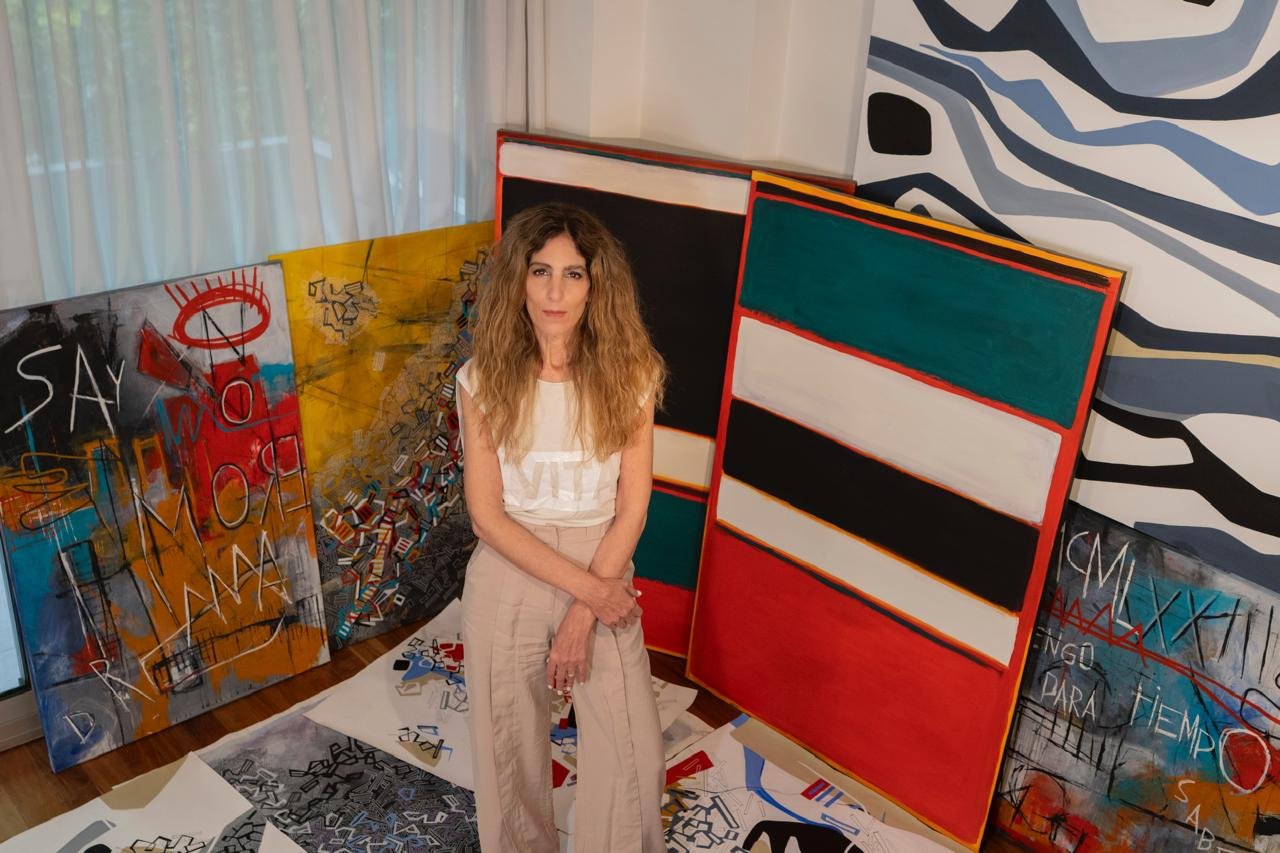
In her abstract-constructionist practice, Argentine artist Pao Lettieri explores the delicate tension between geometry and emotion —a visual field where color, vibration, and structure converge to suggest perpetual transformation.
There is a precise kind of instability running through Pao Lettieri’s paintings. Her compositions, woven from angular forms and chromatic pulsations, seem to oscillate between order and collapse. Modular structures —sometimes regular, sometimes fractured— drift through luminous spaces, as if hovering on the verge of implosion.
This state of suspension defines her visual language: an abstract field charged with energy, where geometry becomes sensorial and the act of painting itself reveals a constant reconfiguration of perception.
The Fractal Series: Rhythm and Resonance
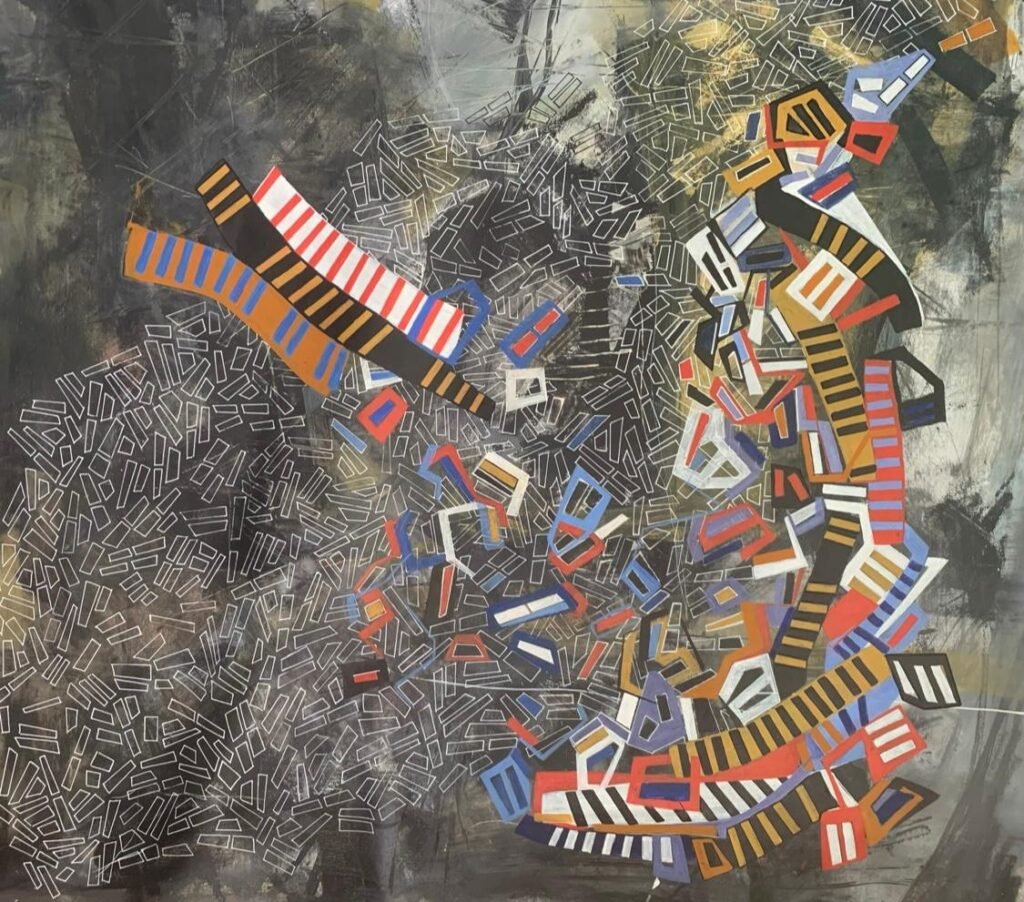
In the Fractal Series, Lettieri takes this dynamic further. Inspired by the spectralist composers of the 1970s —who deconstructed sound to its minimal vibrations— she transfers that principle to the realm of color and form. Each segment, each chromatic layer, behaves like a frequency: minimal in isolation yet expansive when repeated.
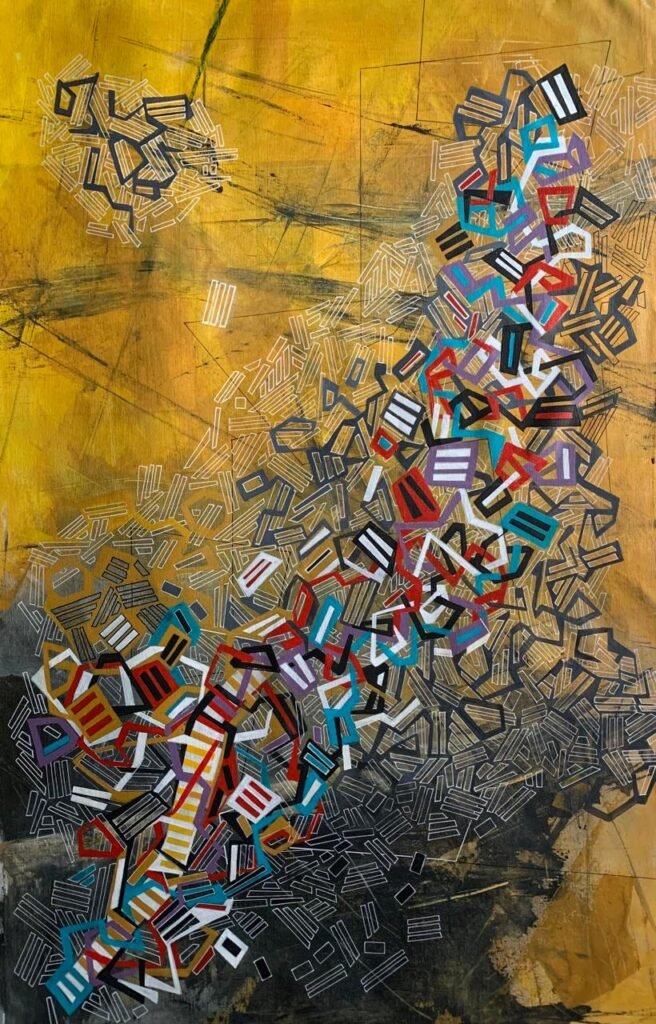
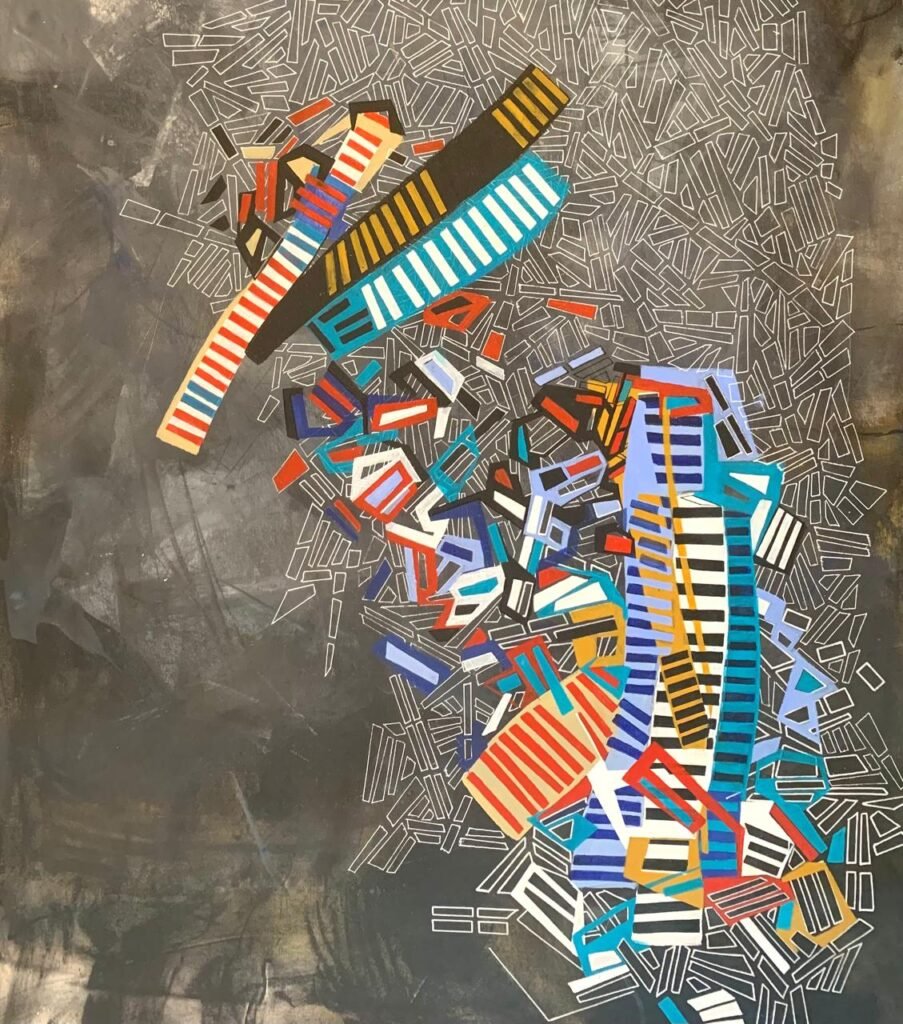
The repetition of these visual “notes” generates a rhythm that is never mechanical but alive, responsive, and unpredictable. What emerges is not an illusion of movement but the feeling of it —a vibrational intensity that seems to breathe within the geometry itself.
Architecture of Emotion
Her canvases can be read as architectures of emotion. Within them, every gesture negotiates between construction and erosion, between the precision of design and the intuition of impulse. This duality gives Lettieri’s work its particular force: a tension that neither resolves nor explodes but endures.
The space she constructs is never entirely stable; it trembles with the possibility of transformation. “I work with the idea of dislocation,” she says, “as if fragments were constantly reconfiguring.” In that process, the viewer becomes part of the movement —invited to inhabit the oscillation rather than to fix its meaning.
The Logic of Color and Energy
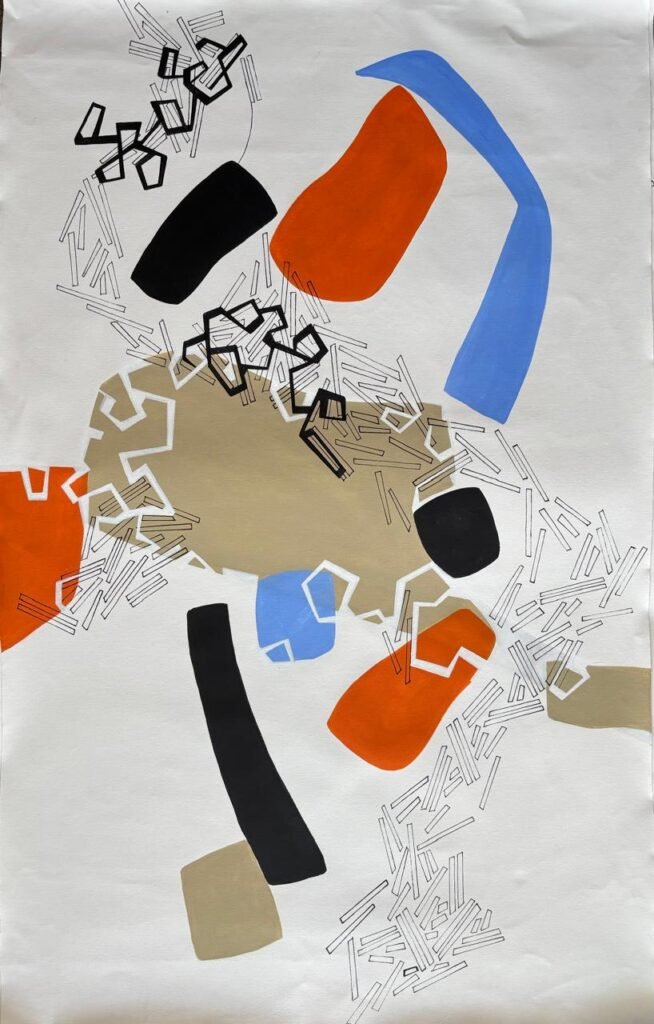
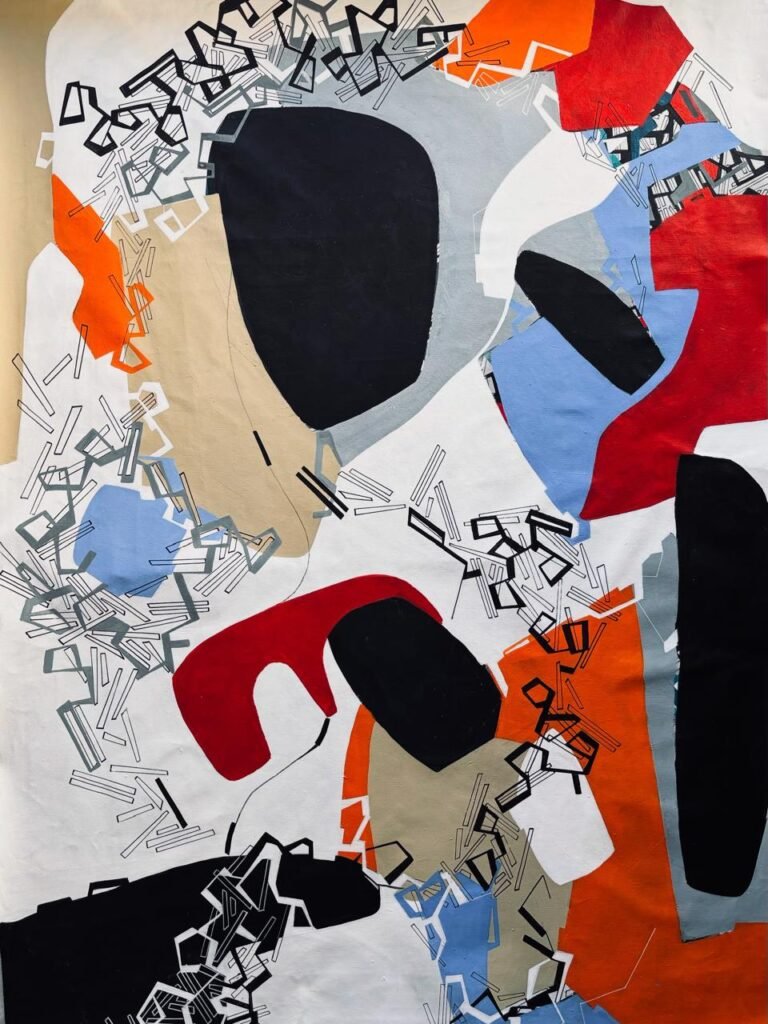
Color, in Lettieri’s work, is not decorative but structural. It organizes emotion. Vivid hues accent zones of tension, while subtle tonal shifts create the illusion of depth and collapse. The interplay of saturation and transparency generates an architecture of vibration: fields that shimmer between presence and disappearance. The result is a chromatic choreography that, rather than resolving into form, insists on remaining in flux. Each piece feels like a momentary crystallization of energy —a captured interval before the next transformation.
Abstraction as Perception
Beyond its formal rigor, Lettieri’s abstraction carries a philosophical dimension. Her practice articulates a way of perceiving the contemporary condition —one where stability is always provisional, where systems (visual, emotional, or social) constantly build and unbuild themselves. “Reality feels like a structure that never fully stabilizes,” she reflects. “There’s always a margin of error, of movement, of displacement.” In that sense, her work becomes a metaphor for existence itself: the delicate balance between control and uncertainty, between intention and accident.
Experimentation and the Unknown
Her process embraces experimentation not as novelty, but as a mode of thinking through matter. Each work begins with an intuition —a sound, a color, a fragment of rhythm— and evolves through repetition and displacement. Mistakes, rather than being corrected, are absorbed into the language of the piece.
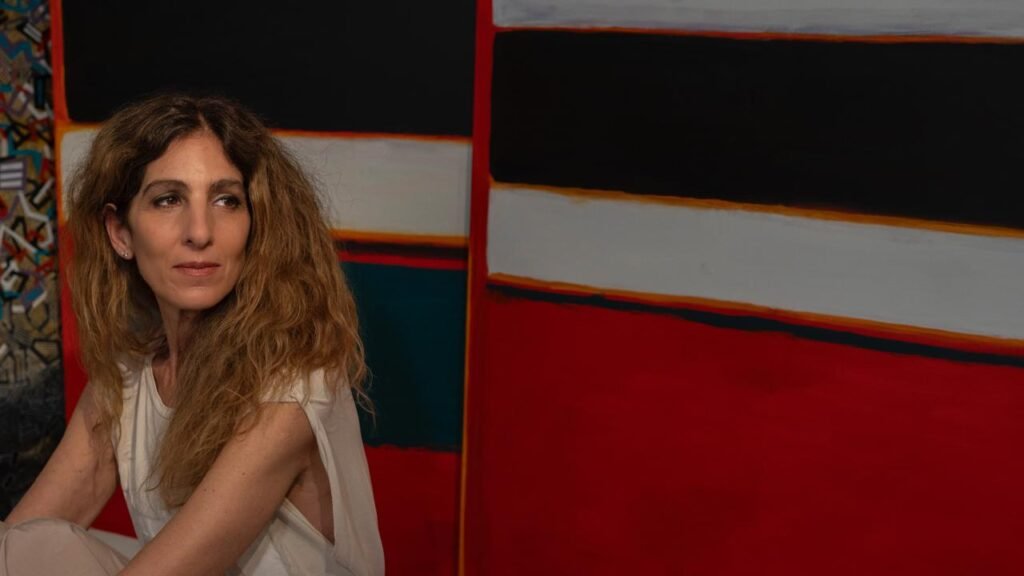
Lettieri often speaks of the “accident” as an active agent in her compositions: an event that opens new visual pathways. This acceptance of unpredictability allows her paintings to remain open-ended, resisting closure and inviting renewed perception.
Between the Digital and the Tactile
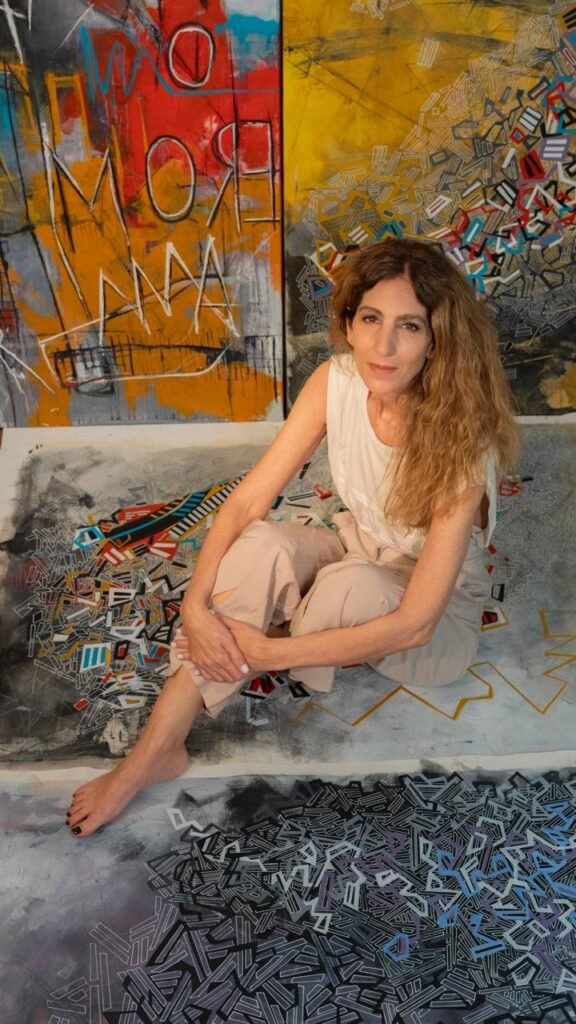
In the wider landscape of Latin American abstraction, Lettieri’s work resonates with a tradition of artists who have sought to reconcile geometry with emotion —from the perceptual experiments of Julio Le Parc to the expressive geometries of Guillermo Kuitca. Yet her position is distinctly contemporary: she navigates between the digital and the tactile, the algorithmic and the human.
While she doesn’t employ technology directly in her process, her compositions evoke the logic of coded repetition, filtered through the imperfection of the hand. This tension situates her at the intersection of the analog and the conceptual —a dialogue where structure and sensation coexist without hierarchy.
Transformation as Practice
Perhaps what defines Pao Lettieri’s practice most profoundly is her commitment to transformation. Each series becomes a new way of perceiving, of testing the boundaries of balance and fracture. “Experimentation,” she notes, “is not about seeking novelty but about keeping uncertainty alive.” In a world increasingly defined by speed and resolution, her paintings insist on the value of hesitation —of looking again, of dwelling in the unresolved. Through her geometric fields, she invites us to reconsider the act of seeing itself: not as a passive reception but as a form of participation, an active engagement with instability.
The Vibration of Seeing
In this way, Lettieri’s abstraction does what the best contemporary art achieves: it expands perception while grounding it in experience. Her Fractal Series offers not a static image, but a rhythm —a visual pulse that mirrors the tempo of contemporary life, with its oscillations between coherence and fragmentation. Within that rhythm, we sense both fragility and resilience, a poetic equilibrium between the engineered and the emotive.
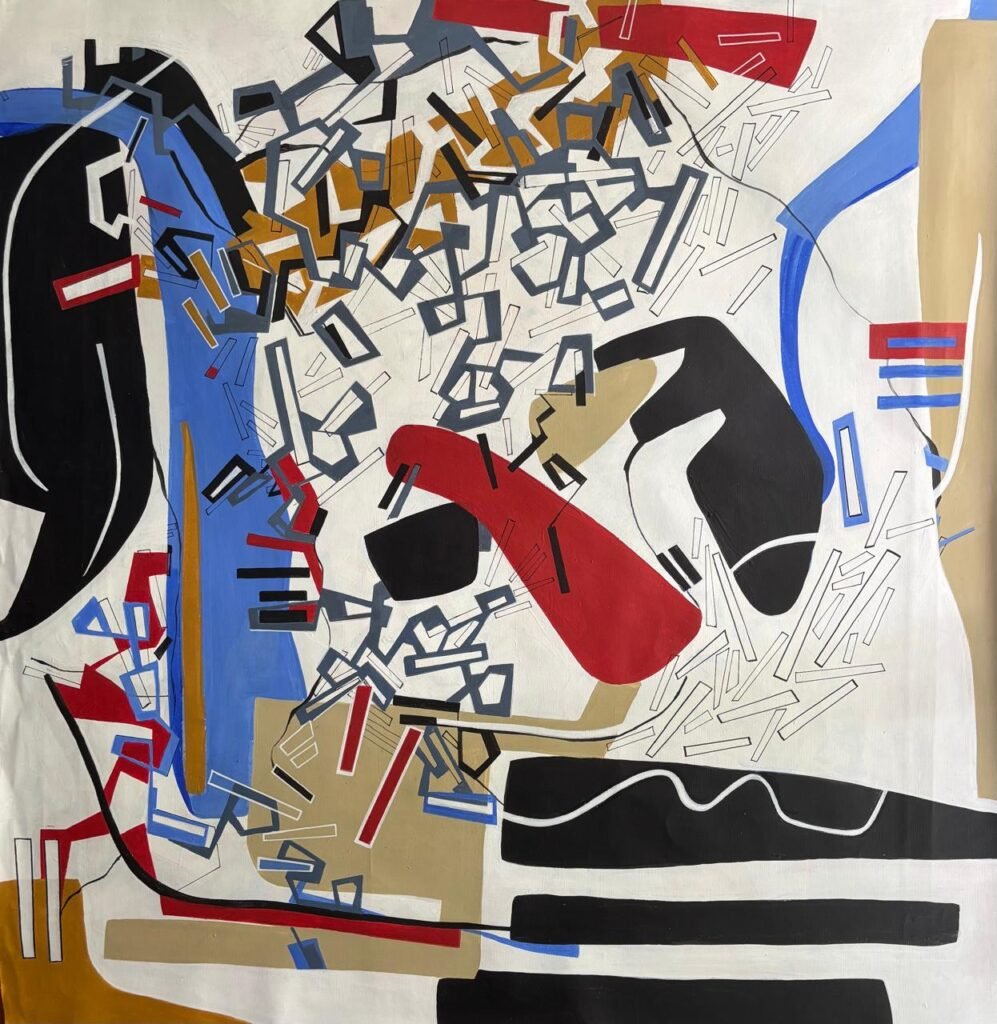
Her paintings, ultimately, are not about geometry or color alone, but about what happens between them —the invisible vibration where emotion meets structure, where order begins to tremble, and beauty reveals its instability.
Interview conducted by The Observer Journal, 2025
Discover more artist profiles and critical features here